
Smith County Projected and Actual Dates
A projected date is a forecast. An actual release date records a completed custody event. MDOC uses the label Tentative Release Date in its inmate detail. The agency also computes earned-release-supervision eligibility, a maximum release or discharge date, and parole eligibility. These dates serve different purposes. None is proof that a person walked out of a facility on that day.
Pretrial custody is different. A person awaiting disposition at the Smith County Detention Center does not have a sentence-based release schedule. Bond may create a path to release, but “bond set” is not “bond posted,” and neither is a jail exit timestamp. A dismissal or time-served order can authorize departure, yet a separate warrant or detainer may keep the person in custody or send the person to another agency.
Scheduled versus actual: Treat a tentative, eligibility, or flat-time date as a milestone. Use the releasing agency's record to confirm the completed event.
| Date or event | What it means | Best confirmation |
|---|---|---|
| Tentative Release Date | MDOC forecast after applicable credits and adjustments | MDOC inmate detail, then Records |
| Parole eligibility | Point at which a qualifying case may be considered | Parole Board case status |
| Maximum discharge | Expected sentence end under the controlling computation | MDOC computation or discharge certificate |
| Actual county release | Completed end of one Smith County booking | Jail booking/release sheet |
Find a Smith County Release Date
Start with jurisdiction, not with a broad name search. The Smith County jail, MDOC, and federal systems keep different records. A transfer from the county jail to state custody ends the county booking but does not release the person to the community. Likewise, a move from state prison to parole or ERS ends confinement while state supervision continues.
- Collect the full name, date of birth if appropriate, booking or case number, MDOC ID if known, and the likely custody system.
- For a current state prisoner, use the MDOC inmate search. Open the matching detail and read the Tentative Release Date with the sentence and location fields.
- For a Smith County jail sentence or pretrial booking, call the Detention Center and identify the specific booking. Ask for the actual release date, disposition, and any receiving agency.
- Read the sentencing order and later court entries for jail credit, amendment, dismissal, bond, probation, or revocation.
- When documentary proof is needed, request the county booking/release sheet or the MDOC time sheet, release certificate, computation, and final status.
The official MDOC inmate search is the entry point for a state prisoner’s result and detail.
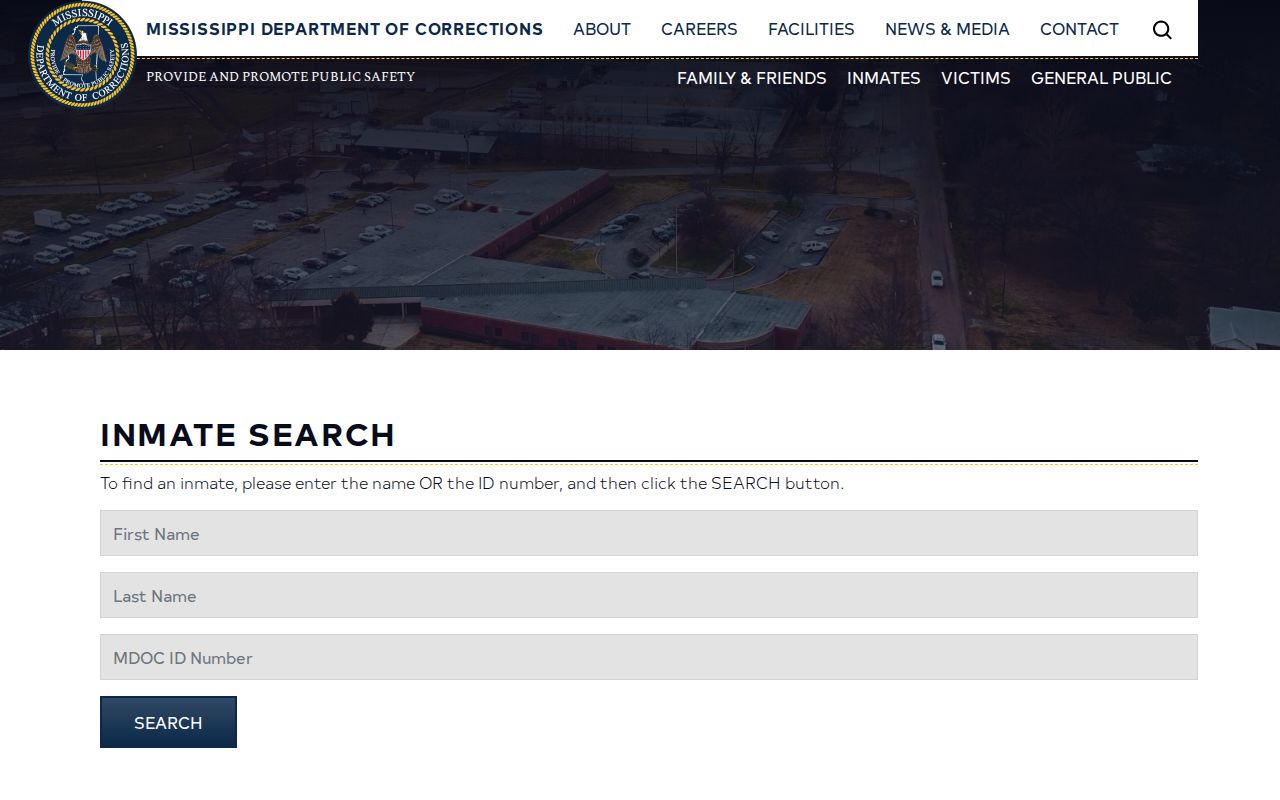
The result must be opened and matched carefully because the estimate, facility, conviction county, and sentence information give the date its context. The complete county route is also explained through the Smith County released inmate search. Use it when the person vanished from the live roster and the custody branch is uncertain.
Note: Smith County roster absence is only a lead; it does not distinguish community release, transfer, court movement, or a data change.
Smith County MDOC Release Fields
MDOC's public result columns include ID Number, last and first name, location, term, offense, and a View link. A detail may show a photograph, date of birth, entry date, location and its change date, number of sentences, offense, sentence length, sentence date, county of conviction, and Tentative Release Date. The Smith County connection may be the conviction county, an earlier jail stay, or community supervision. It does not mean a state prison sits in Smith County.
Search results emphasize current incarceration. They were not confirmed as a complete archive of all discharged people. If the inmate record disappears near an expected date, check the separate parolee search. A matching parolee detail may show community-supervision location, officer, offense, and Flat Time Date. That supports release from confinement into supervision, but not final discharge. A person who completed all MDOC jurisdiction may require a written Records request.
| Lookup field | Use | Limit |
|---|---|---|
| MDOC ID | Strong record match across state systems | Does not state county jail release time |
| Location | Shows the listed state placement | Can change with transfer or processing |
| Sentence data | Provides the basis for computation | Must be read with all sentences and credit |
| Tentative Release Date | Shows MDOC's current estimate | May move and is not proof of departure |
Smith County Earned Release Rules
Miss. Code § 47-5-138 provides earned time for covered state sentences imposed after June 30, 1995. When MDOC finds the required conduct and performance, the statute describes 4.5 days of earned time for each 30 days served, capped at 15 percent of the sentence. That cap produces the familiar shorthand that a covered person serves about 85 percent before earned-release supervision.
The shorthand is not a calculator for every case. Eligibility exclusions apply. Credits can be forfeited. Lawful jail credit, the sentence structure, classification, review, and an approved release plan can affect the state computation. ERS also is not full discharge. The person keeps inmate status and remains under MDOC jurisdiction through the applicable sentence period.
Parole uses a separate framework under Miss. Code § 47-7-3. Rules summarize different fractions for qualifying offense and sentence groups, with exclusions for specified offenses and offender classes. Reaching parole eligibility does not compel the Board to grant parole. Reaching an ERS milestone likewise does not prove that all release steps are complete. The sentence and the agency’s current computation control. The MDOC Types of Supervision page distinguishes parole, probation, and earned-release supervision.
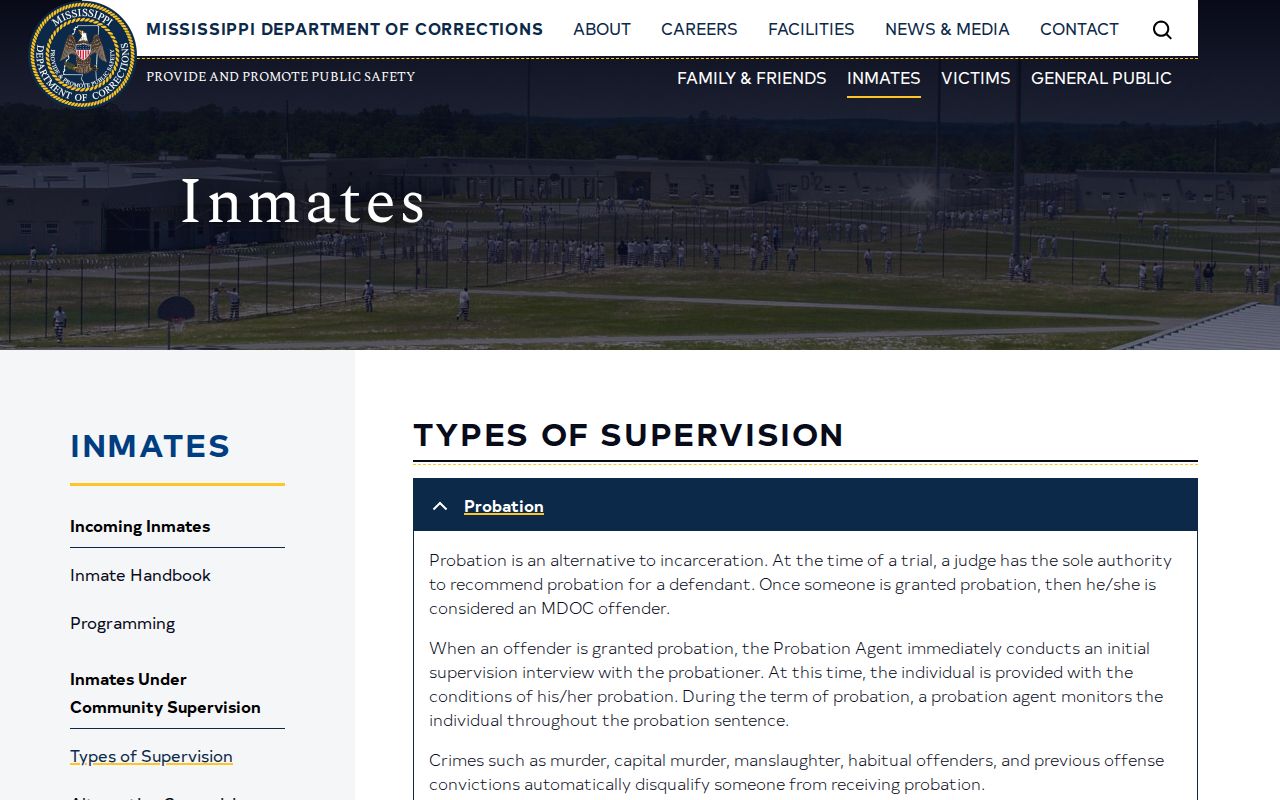
This state source helps explain why leaving a prison cell can begin a supervised phase instead of ending the sentence.
Smith County Jail Release Calculations
Do not apply the MDOC earned-time formula to a local Smith County jail term without legal authority. The county sources publish no local good-time policy, public calculator, routine release schedule, or weekend and holiday practice. For a county sentence, obtain the sentencing order, the booking date, lawful jail-time credit, and the Sheriff’s actual computation. Call the Detention Center before relying on an estimated departure day.
The Smith County Circuit Clerk keeps felony dockets, pleas, indictments, orders, minutes, and complete proceedings. Circuit Court also hears misdemeanor appeals. Justice Court covers many criminal violations outside municipalities and related preliminary matters, while a municipal case routes to its city court. Identify the case type first. A court order explains legal authority, but only the jail record shows when staff completed the exit and whether another agency received the person.
If the date is needed in writing, request an existing booking/release sheet. Ask for the actual release date and time, disposition, and destination or receiving agency if those fields exist and are public. The Sheriff publishes no special release-record form, hours, or fee schedule. The primary contact is the Smith County Detention Center, 206 Courthouse Square, Raleigh, MS 39153, at 601-782-4531. Call first.
Why Smith County Release Dates Change
A valid estimate can move as the legal and custody record changes. The cause may add time, subtract time, or leave the date intact while changing where the person goes. The releasing agency must reconcile all active sentences and holds before physical release.
| Factor | Possible effect | Record to check |
|---|---|---|
| Corrected jail credit | Moves the computation after verified time served is added or corrected | Sentencing order and MDOC time sheet |
| Earned-time loss or restoration | Changes an MDOC tentative date for an eligible sentence | MDOC computation |
| Amended sentence | Changes sentence length, structure, or credit | Docketed court order |
| Consecutive or concurrent terms | Changes how multiple sentences combine | Judgments and agency computation |
| Detainer or new hold | May prevent community departure or cause transfer | Release disposition and receiving agency |
| Parole or ERS review | May change the confinement-to-supervision path | Board action and MDOC status |
Data correction can also alter a public field without any new custody event. Conversely, a date may disappear because the person transferred or because the online record changed. Neither event, standing alone, proves release.
Note: A release from Smith County control may be a transfer to MDOC, another jail, federal custody, or immigration custody.
Smith County Release Date Milestones
Mississippi’s several milestones are the central release-date quirk. ERS eligibility, Tentative Release Date, maximum discharge, and parole eligibility are calculated for different legal questions. The 85 percent shorthand comes from the 15 percent earned-time ceiling in § 47-5-138. Parole fractions come from a separate statute and depend on the case. Mixing the two can create a confident but false release forecast.
MDOC's Family and Friends Guide defines the tentative date as an anticipated incarceration-release date after adjustments. It says the exact date is conveyed through the case manager after travel-plan verification and describes state release processing that can take 30 to 45 days. It also discusses transport under MDOC's process. Those state-prison practices must not be attributed to the Smith County jail, where no comparable local procedure was published.
For proof, seek the record tied to the milestone. A parolee entry supports community supervision. A discharge certificate supports final state discharge. A county booking/release sheet proves the county stay ended. A court order proves the legal ruling. The VINELink release check can provide a pending custody alert from a participating agency, but the source record should still confirm the event.
Mississippi date fields answer different questions. Match the milestone to its agency before stating that a Smith County inmate has been released.
Confirm Smith County Release Dates
For a county booking, call the Smith County Detention Center and ask about the precise stay. Request the recorded time, release type, and receiving agency rather than asking only whether the person is “there.” If staff cannot provide documentary detail by phone, submit a narrow public-records request for the existing release sheet.
For state custody, contact MDOC Records at P.O. Box 24388, Jackson, MS 39225, 601-933-2889, or MDOCRecordsDepartment@mdoc.state.ms.us. Ask for the time sheet, release or discharge certificate, actual release type and date, sentence-credit computation, and final custody or supervision status as needed. For an individual parole decision, the Mississippi State Parole Board is the record owner.
Finally, follow the destination. A Smith County release marked transfer needs the receiving agency’s admission or status. A parolee record confirms community supervision, not full discharge. A federal or immigration branch applies only when the county record supports it. Keep a dated copy of each source consulted. This final check turns a forecast into a documented custody timeline.