
Detention Center Release Destinations
Smith County Detention Center holds both pretrial and sentenced adults. That mix creates several paths out of the building. A pretrial person may leave on bond or after dismissal. Someone serving a county term may leave after time served. Another person may depart because the Sheriff transfers custody to the Mississippi Department of Corrections, another jail, the U.S. Marshals Service, or immigration authorities. Each event ends the Smith County booking, but only some place the person back in the community.
The release disposition is the most useful field. It is the agency's recorded description of how that jail stay ended. If it says transfer, ask for the receiving agency. If it says bond, dismissal, or time served, ask whether a second case, warrant, or detainer changed the destination. A detainer is another agency's request to hold or transfer a person. Even a valid release order in one case may not clear that separate hold.
Confirm Detention Center Release Records
The Smith County Sheriff's live BluHorse list is described as a current-inmate search. Its county setting disables public past-inmate access. Generic vendor code for past bookings and a release-date field does not create a public Smith County release archive. The dependable route is a narrow request for the existing booking and release entry.
- Check the current roster using the full name and any known booking detail. A current match supports present county custody at that moment.
- If the name is absent, call the detention center and identify the booking. Ask for the actual release date and time, recorded disposition, and receiving agency.
- Request the booking/release sheet or jail-register entry in writing. Include the booking number or an approximate booking date when known.
- When the entry shows transfer, continue with the named receiving system. Do not label the county departure as community release.
- Use the court file to explain the legal result, while keeping it separate from the jail's proof of physical departure.
A focused request can seek booking number, booking date and time, actual release date and time, release type, charge or case number, bond data, holds, and destination if those fields exist and are public. The county need not create a new analysis. Ask for the record as kept. The full county search and record path is also set out on the Smith County released inmates page.
Detention Center Release Contact
The Sheriff's Office oversees the detention center and is the first record owner for a county booking. No separate public records-unit hours, fee schedule, or dedicated request form was found. Call before sending a request to confirm the current custodian, accepted delivery method, inspection hours, and any estimate.
Smith County Sheriff's OfficeSmith County Detention Center
206 Courthouse Square
Raleigh, MS 39153
Phone: 601-782-4531
Fax: 601-782-4003
Email: jhouston@smithcountyms.gov
Records hours: call to confirm
The Mississippi Public Records Act allows access subject to exemptions, redaction, and actual-cost fees. Ask for an electronic copy when available and request a cost estimate before chargeable work. If information is withheld, ask the custodian to identify the authority and release any reasonably separable public part.
Note: The county publishes no routine release time, exit door, waiting location, property-return process, or weekend schedule, so call before traveling.
Detention Center Current Roster
The public roster can answer a narrow current-custody question. The Sheriff's page says it shows current inmates, booking photographs, and related charges. It does not promise a list of prior inmates. During research, the live county configuration had its Past Inmate control locked. The vendor's “Books 24hr” wording concerns a generic booking function and is not a list of people released during the last day.
| Source | What it can establish | What it cannot establish |
|---|---|---|
| Current roster | A current Smith County listing when checked | A complete past release history |
| Release entry | Recorded departure time, type, and destination | The final result of every related case |
| Court record | Orders, pleas, judgment, and sentence | The exact time jail staff completed release |
| Receiving locator | Custody or supervision in its own system | Release from all other jurisdictions |
The roster may change for a court appearance, transfer, hospitalization, data correction, or a completed release. That is why absence alone is unresolved. Take note of when the search occurred, then confirm through the jail record.
View Detention Center Records Source
The official Smith County Sheriff's page identifies the detention center, publishes its contact information, and links the current-inmate search.
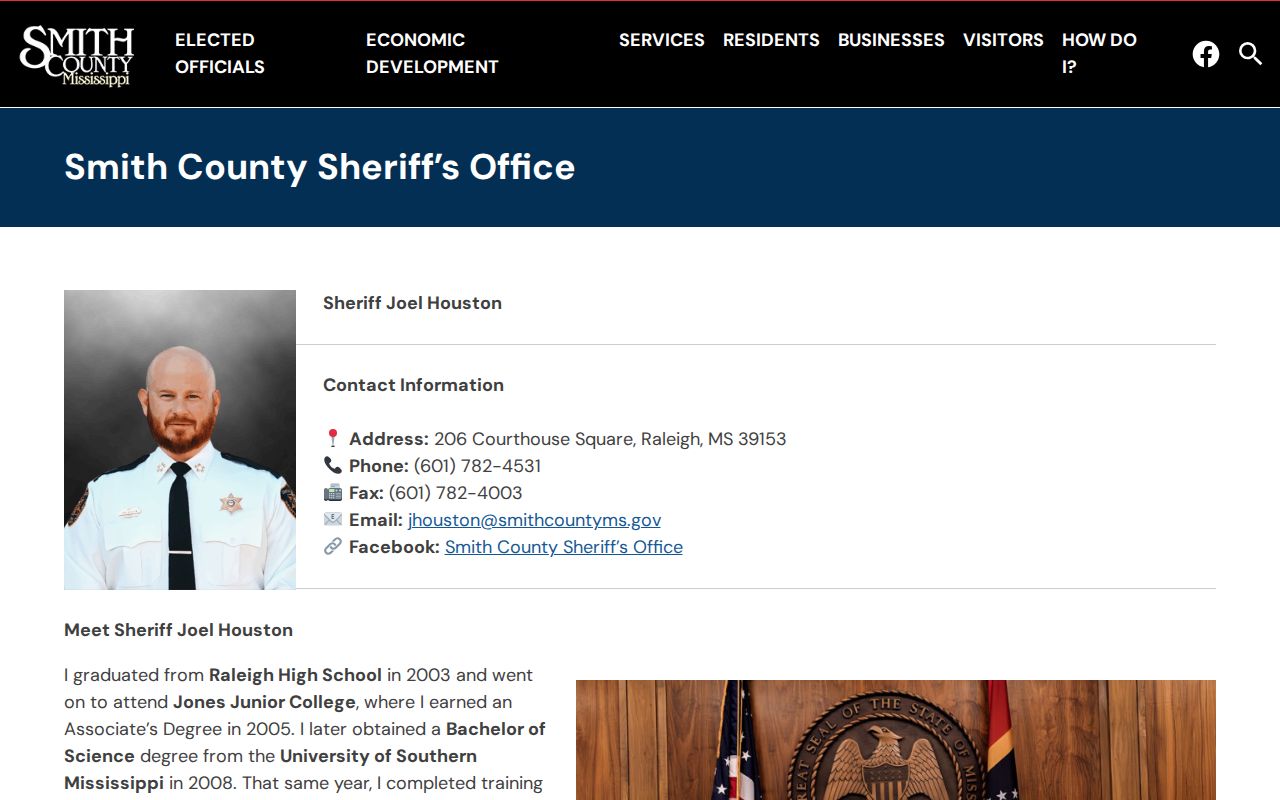
The image confirms the correct local starting point, while the written release entry remains the stronger proof after a person leaves the public list.
Detention Center Transfer Records
A transfer is not freedom from custody. When the county release entry names MDOC, search the MDOC inmate lookup by name or MDOC number. Review the location, term, offense, and detail record. A tentative release date is an estimate. It does not show that transfer intake or later release has occurred.
If the recipient is another county, contact that jail. A USMS entry points to federal pretrial detention or transport and should be followed through the federal district and responsible facility. Use the BOP locator only after federal custody or designation is supported. An immigration detainer points to ICE's separate civil detention system. Never run all systems by default when the record gives no jurisdictional reason.
- Transfer
- A move from Smith County custody to another agency.
- Release
- The event ending one recorded stay, which may or may not return the person to the community.
- Discharge
- An agency term that often means sentence jurisdiction ended, subject to the issuing record.
- Detainer
- A hold or transfer request from another authority.
Detention Center Bond Release Proof
Because this jail holds pretrial adults, bond records often matter. “Bond set” means a court allowed release under stated terms. It does not mean the bond was posted. A receipt can show that payment or undertaking occurred, but it still may not show when staff completed the physical release. A separate hold can also keep the person in custody.
Ask for both the bond or court document and the detention center release entry. Compare the case number and booking number. The jail record should supply the actual departure field and disposition. The court docket can then show whether the charge remained pending, was dismissed, or reached another result. Arrest and booking data alone never establishes guilt.
Note: A release from one Smith County case does not clear an unrelated warrant, detainer, or sentence.
Detention Center Record Fields
A precise field request reduces delay and guards against mistaken identity. Supply the person's full name, spelling variants, approximate admission period, and booking or case number if known. Do not send sensitive identifiers unless staff needs them to distinguish records.
| Requested field | Why it matters |
|---|---|
| Booking number | Ties the release to one jail stay |
| Admission date and time | Separates repeat bookings |
| Actual release date and time | Shows when county control ended |
| Release disposition | Distinguishes bond, time served, dismissal, or transfer |
| Receiving agency | Identifies where a transfer went |
| Holds or detainers | Explains why a planned release changed |
Retention time was not published for the online roster or the underlying release record. Online display and agency retention are different. For an older booking, ask whether the entry remains in the jail-management system, an archived database, or a paper register. A lawful seal or expungement order may limit access, so the custodian's response controls.
Verify Detention Center Release Status
The best confirmation chain is short: current roster, Sheriff contact, booking/release entry, then the receiving agency when a transfer appears. Add the court docket only to explain the legal basis. A court order and a jail release field answer different questions.
For a community release, the record should support the time and recorded reason. For continued custody, stop calling the event a community release and follow the destination. For an unclear no-result, report only that no public match was found at the time checked. That wording preserves the difference between an online gap and a verified Smith County Detention Center release.